
There is a moment in the Sāmaññaphala Sutta where King Ajātasattu walks into Jīvaka’s mango grove and stops dead. The Buddha is there with over a thousand monks, and the King cannot hear a thing. Not a cough, not a sneeze, not a single shuffle. He turns to Jīvaka, hair standing on end, and asks whether he is being led into a trap. No gathering of that size could possibly be that quiet unless something was very wrong (Walshe, 1995).
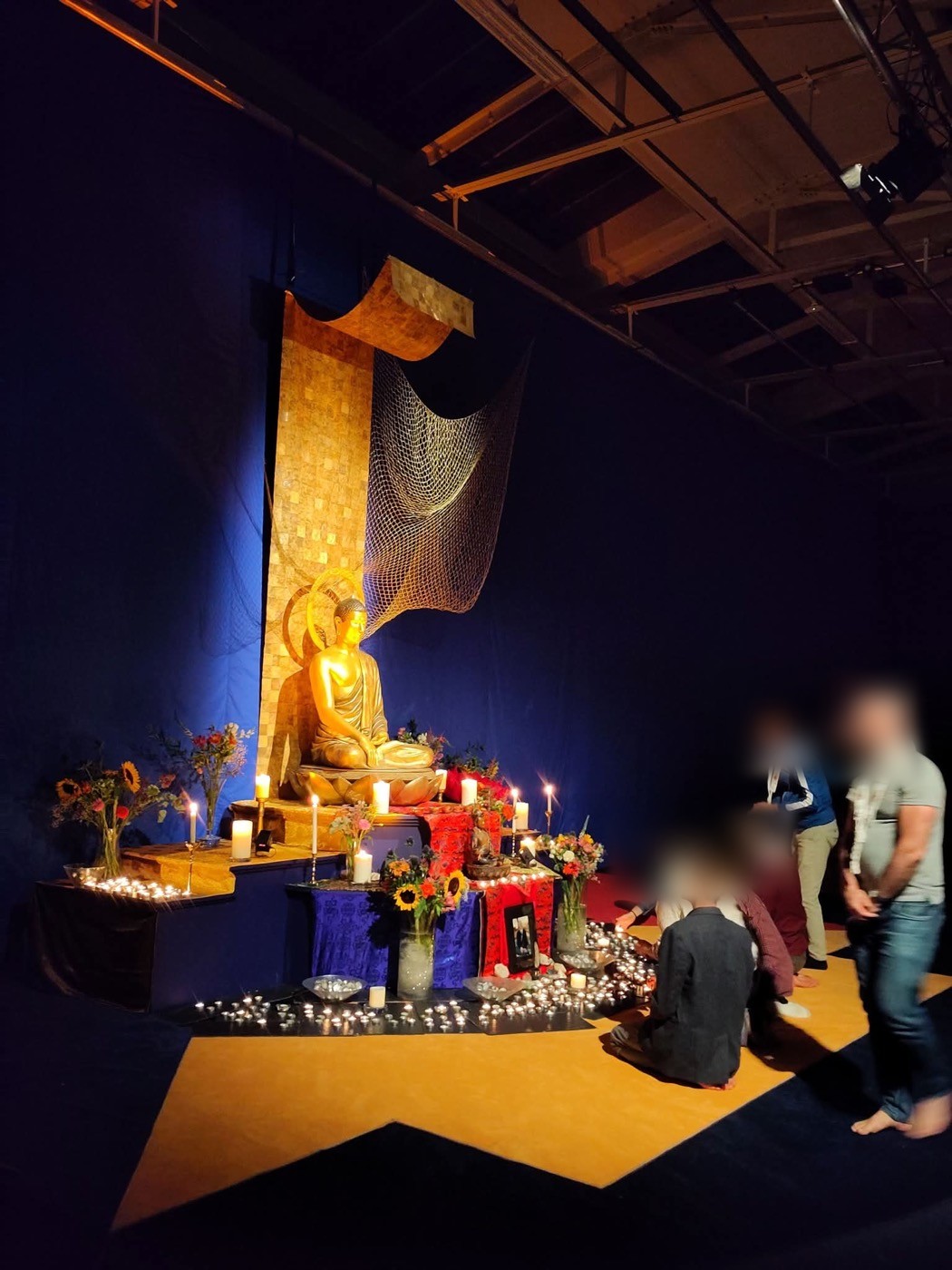
This story came to mind for me and for others when reflecting on our time at Wymondham, sitting in the main shrine room with more than 620 other Order members in complete stillness. Actual stillness, held by a room full of people who have spent decades - in some cases longer than I’ve been on this earth - deepening their practice of meditation. Such a precious opportunity, and so rare nowadays, especially when in such large numbers.
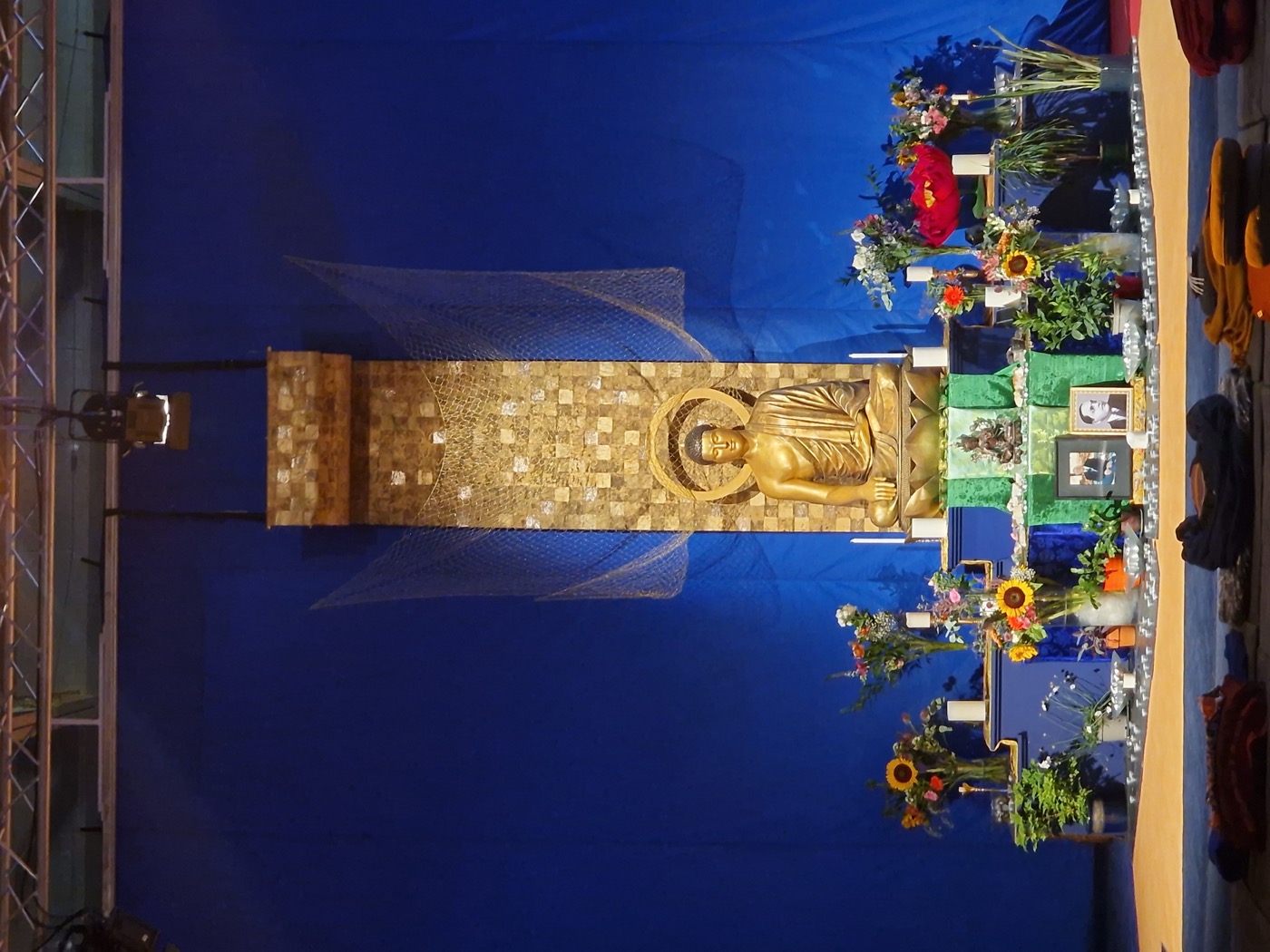
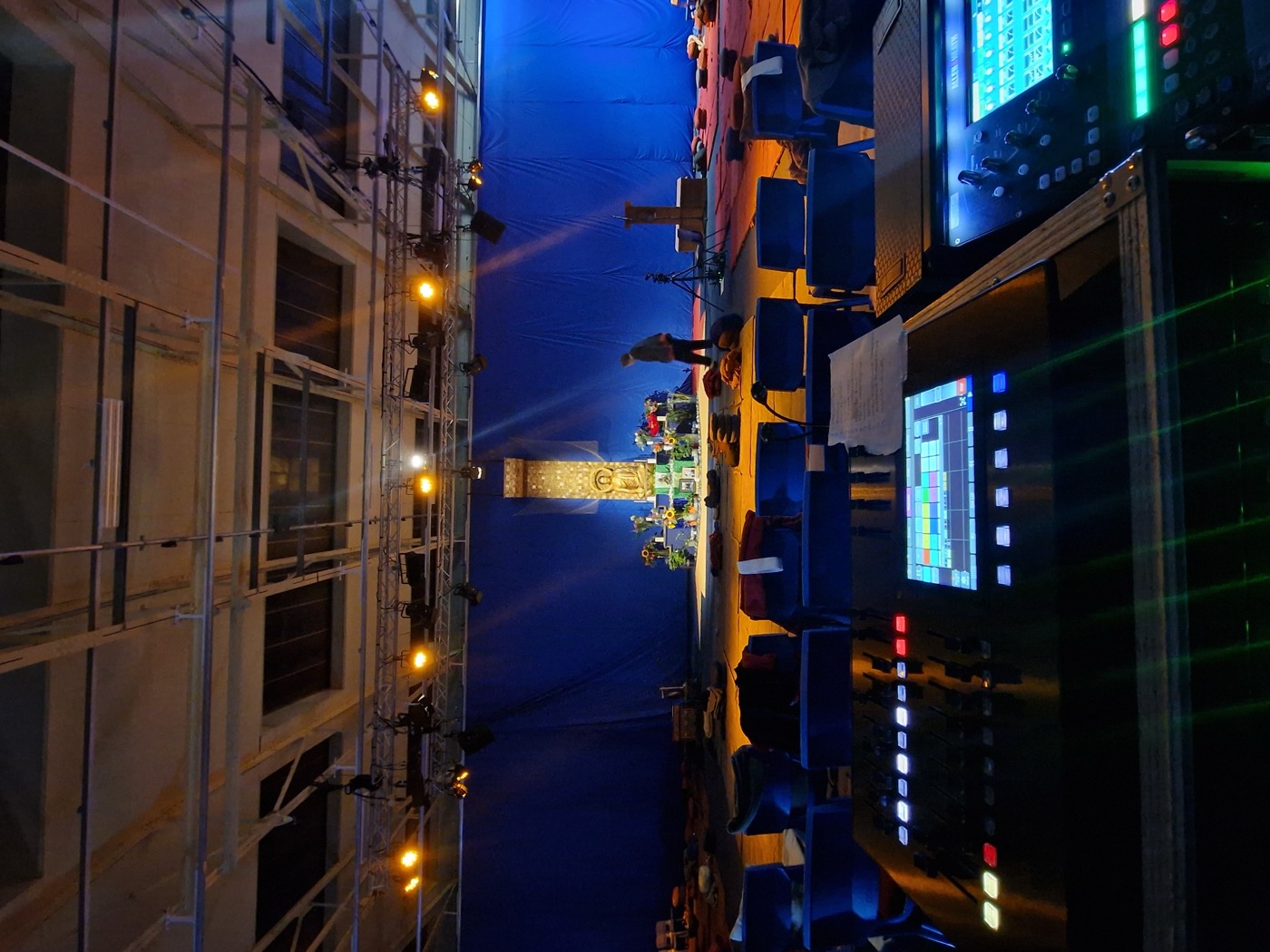
Before we arrived, an incredible team of volunteers had worked their magic, transforming the sports hall into a magical realm, surrounded by blue and with a truly stunning shrine that greeted us each morning.
This was my first Order convention.
What I did before I arrived
The most useful advice came from my local chapter, and that was to expect a lot of people. Don’t try to do everything. Remember to rest!
Partly due to busy-ness, and partly because I didn’t want to get into full on plan-every-second-of-the-day mode, I barely looked at the programme in advance. The only ‘dates’ I booked were a few meals - with my preceptor and the Dharmacharinis from my ordination retreat, and with my potential kalyāṇa mitra, that was it. Everything else I deliberately left open.
I now think this was the single best decision I made. Booking the people rather than the sessions meant that the precious person-to-person time was protected, and the rest of the week could arrange itself around them. It was such a delight to get to spend time with so many friends from across the country, and also lovely to have many impromptu and serendipitous meetings with people throughout the week in the lunch queue or walking between sessions.
Drawing out the week by hand
When I got the full programme I sat down with my paper notebook and drew out a diary for each day bullet journal style, 0600 to 2200, with the time slots blocked in. Sessions, breaks, meals, who I was meeting and when. It made it much easier than looking at the paper programme, and cross-referencing with my Google calendar who I was meeting where and when!
Then I went through the fringe sessions and marked the ones I actually wanted to attend. For me, these included a session on Order ethics as practice, and Vessantara’s daily led sessions on sādhana. Everything else stayed fairly loose, with vague ideas of sessions that looked like they might be interesting but no fixed plans.
Doing this by hand really helped, I think. Seeing the whole week laid out physically showed me where the gaps were and, more importantly, where they were not. It stopped me from cheerfully agreeing to three things in the same hour, which I would absolutely have done otherwise!
Say yes to the job
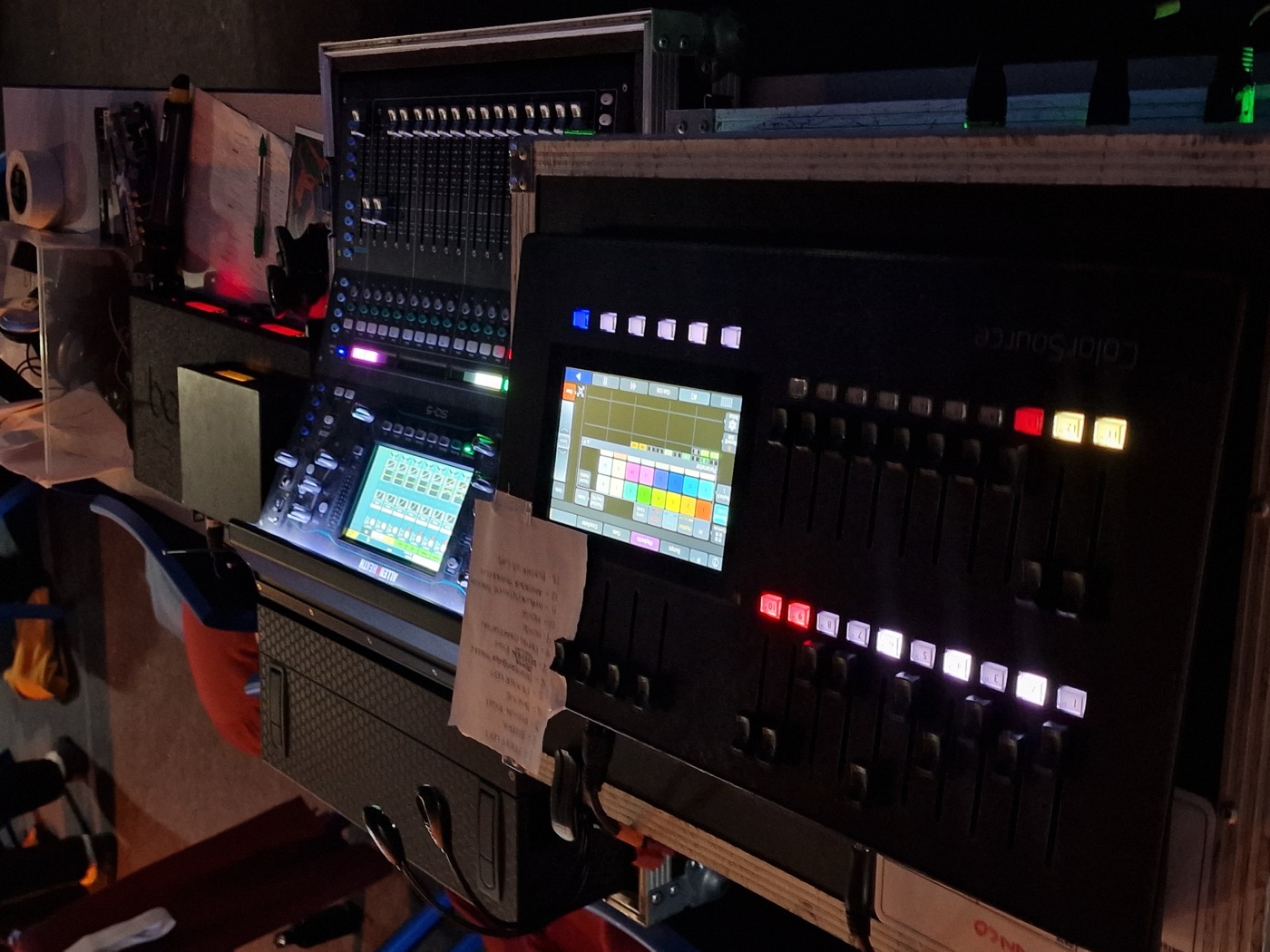
Quite a lot of people on the convention get assigned a job - everything from helping to serve the meals to being on reception or driving the ‘bus’ (golf carts that shuttled the less-able around the site). Mine was helping to staff the lighting and sound desk in the main shrine room, which I had never done in my life.
Vilasamuni, our team lead, ran an onboarding session on the first day, and for the first few shifts I was paired with other people who thankfully had a bit more experience. By the third day I was flying solo for the morning meditation. Nerve-wracking, indeed, but it all went fine.
I would encourage anyone going to their first convention to offer yourself for a job if you’ve got the energy and capacity to do so. Sitting behind that desk gave me a completely different view of the shrine room. I watched the space being built up each day, the flowers being refreshed, the candles being blown out by one at the end of the night. It was also quite intense being in direct line of sight to the Buddha rupa … the stare felt quite piercing at times!
I got to know a small team quite well, people I might never have met at a gathering that size.
There’s something quite special about being responsible for the conditions in which several hundred people meditate, listen to talks and panels, and come together for ritual and devotion practice.
Sleep is part of the practice
I slept really badly the first night - too much stimulation, too much excitement, and an incredibly tall cabin bed in the boarding house which wasn’t particularly comfortable! By late afternoon on day two I was flagging so badly that I needed a strategic power nap to get through the evening ritual.
After that I gave myself permission to nap whenever I noticed the tiredness starting to build, rather than pushing through and arriving at the evening like an exhausted nodding donkey. It made an enormous difference. A twenty minute nap might have cost me a few conversations, but it bought me an entire evening of actually being present (and meant the rest of the shrine room didn’t endure my snoring when I nodded off!)
If you are going to your first convention, plan for this in advance rather than booking yourself back-to-back. Work out where you can go back to your room (or tent) for a lie down. Assume you will need to.
What I would do differently
I would make time to run.
I prioritised meeting people, and I do not regret that at all, but between the sessions and the meals and the conversations there was almost no space left, and by the end of the week the only exercise I had taken was walking around a very large school campus. I noticed it in my body and in my mind, and I had angry red entries in my training plan for the three sessions my coach had suggested I might do while I was away.
Next time I will put a couple of runs into the diary the same way I put in the meals, as something already booked rather than something I might get to.
I’d also be sure to take lots more money … there were some incredible stands in the marketplace and lots of really creative, beautiful things on offer!
Being welcomed into the Order
One of my favourite moments was the evening puja where everyone ordained since the last big gathering came to the front to introduce themselves. Each of us said our name, what it meant, and where we were from.
There were six of us from Ipswich. A bumper crop!
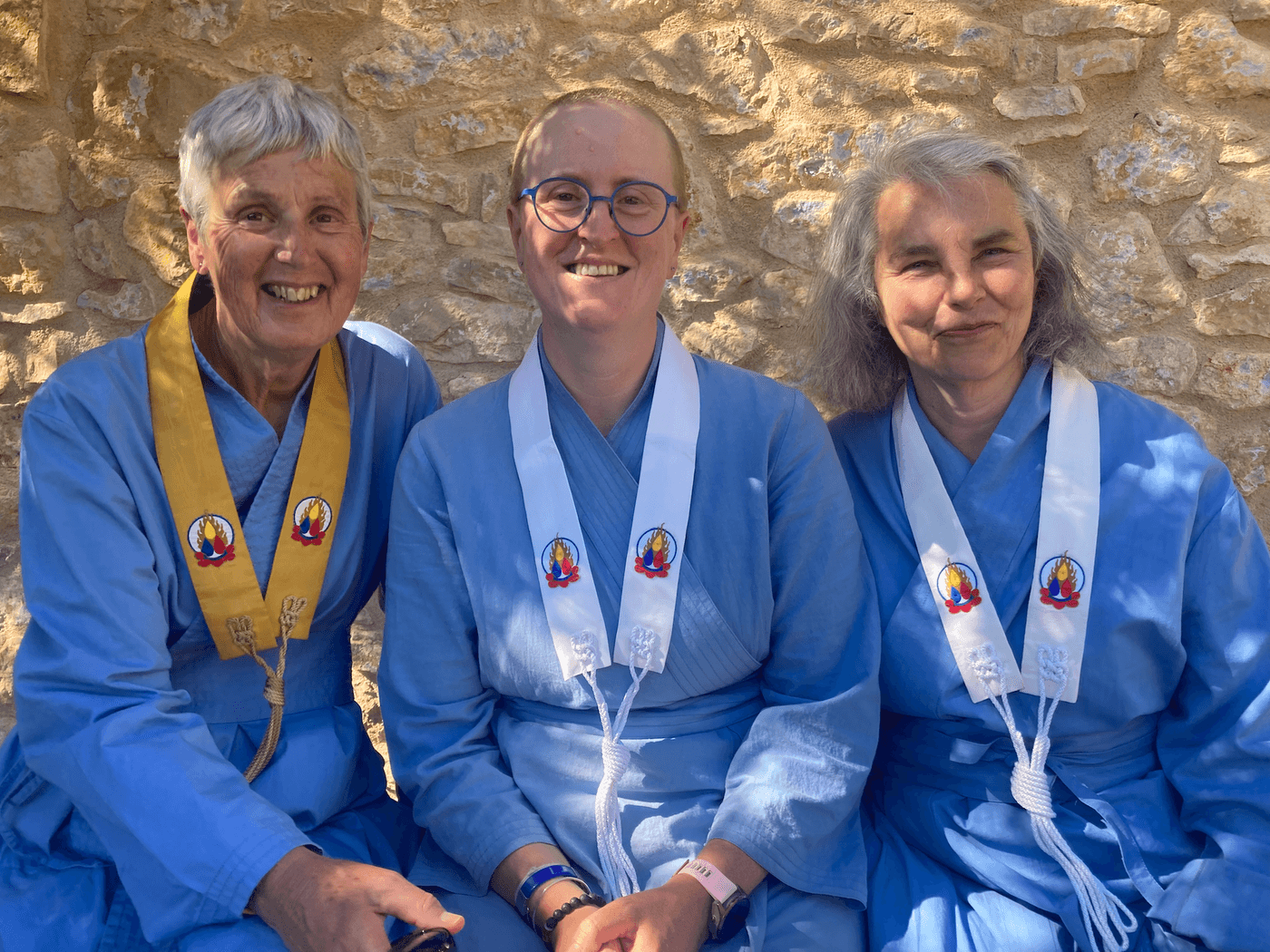
Standing up there, saying my name out loud to a room of people who understood exactly what it had taken to get there, was a memory that I will carry for a long time. Sixteen years of training, and along the way so many people met and known and loved - Order members, mitras who have since been ordained themselves - many of them were in that room.
It was also lovely to hear from some people that they’d read my Shabda contribution last month about my decision to wear my robes and kesa all the time - lots of support and encouragement which was much appreciated!
What I would say to someone going for the first time
Book the people. Leave the rest open until you have the programme in your hands, then draw the week out on paper and highlight only the things you really don’t want to miss. Sleep when you need to sleep, and put movement in the diary before the diary fills up.
And when the shrine room falls silent, just take a moment to really experience it. So many people sitting in stillness is not an ordinary thing, however normal it comes to feel by the end. Ajātasattu was right to be astonished, he was just wrong about what it meant.
I would love to hear from others about their first convention. What did you wish you had known before you arrived?
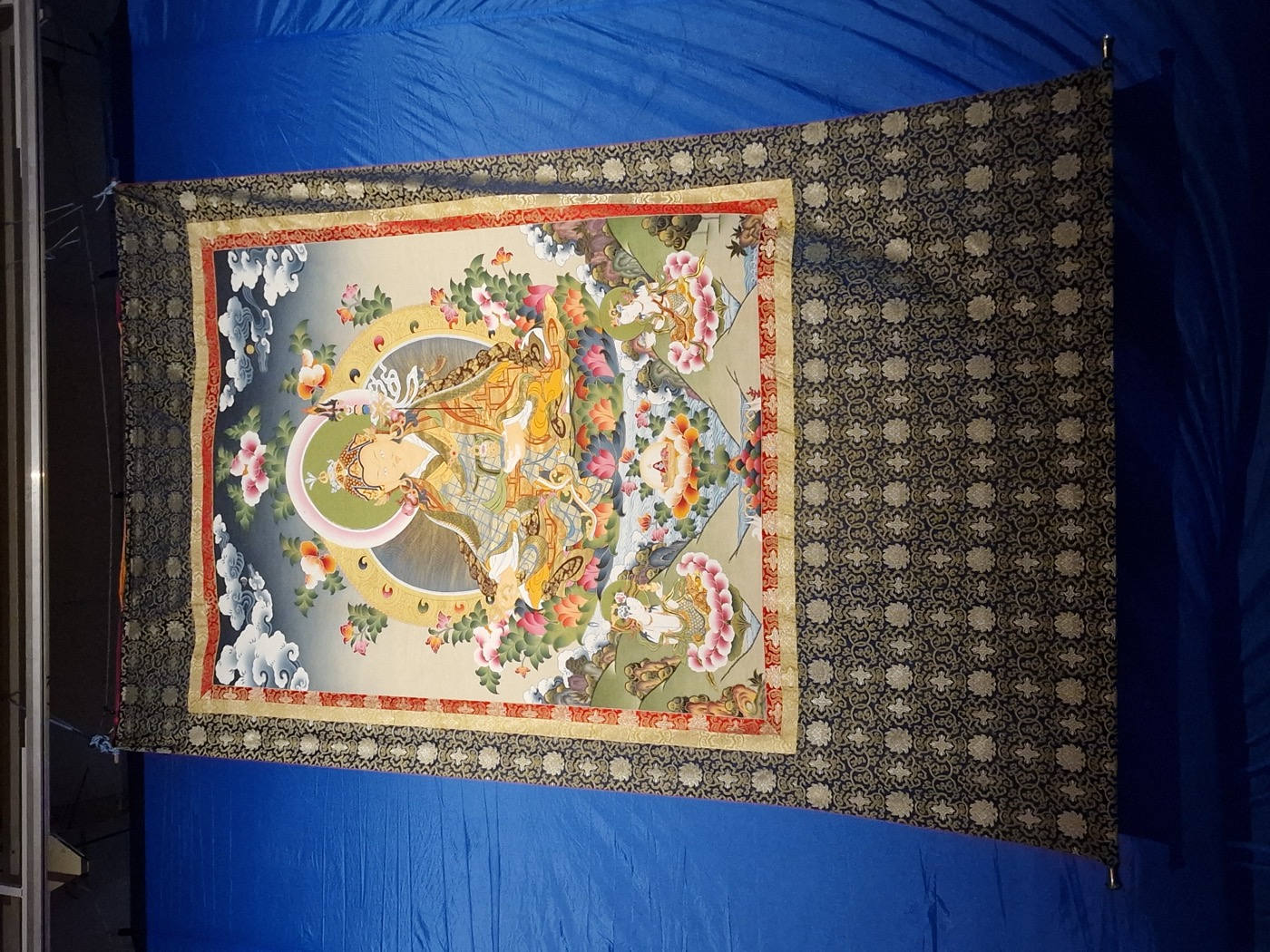
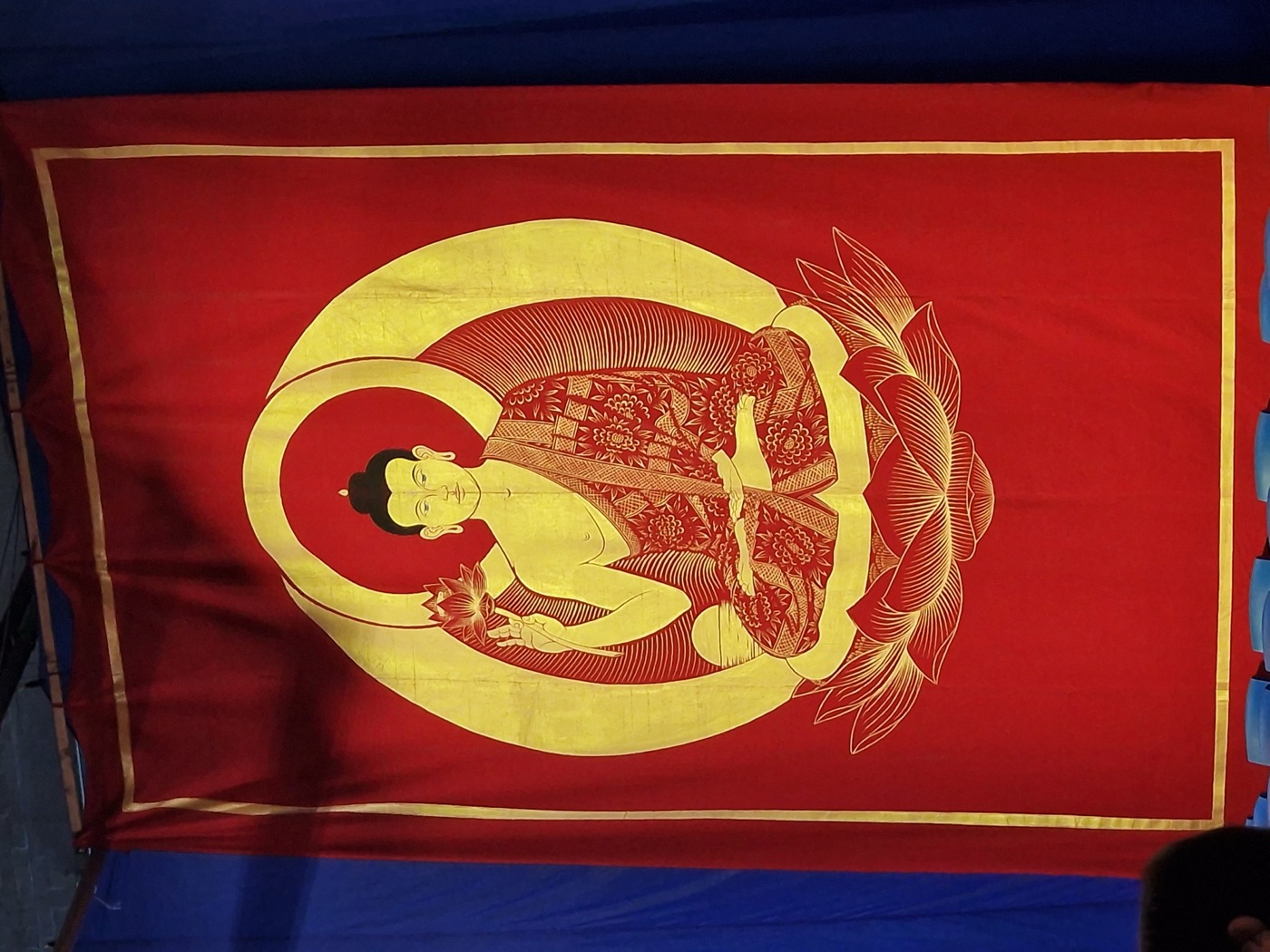
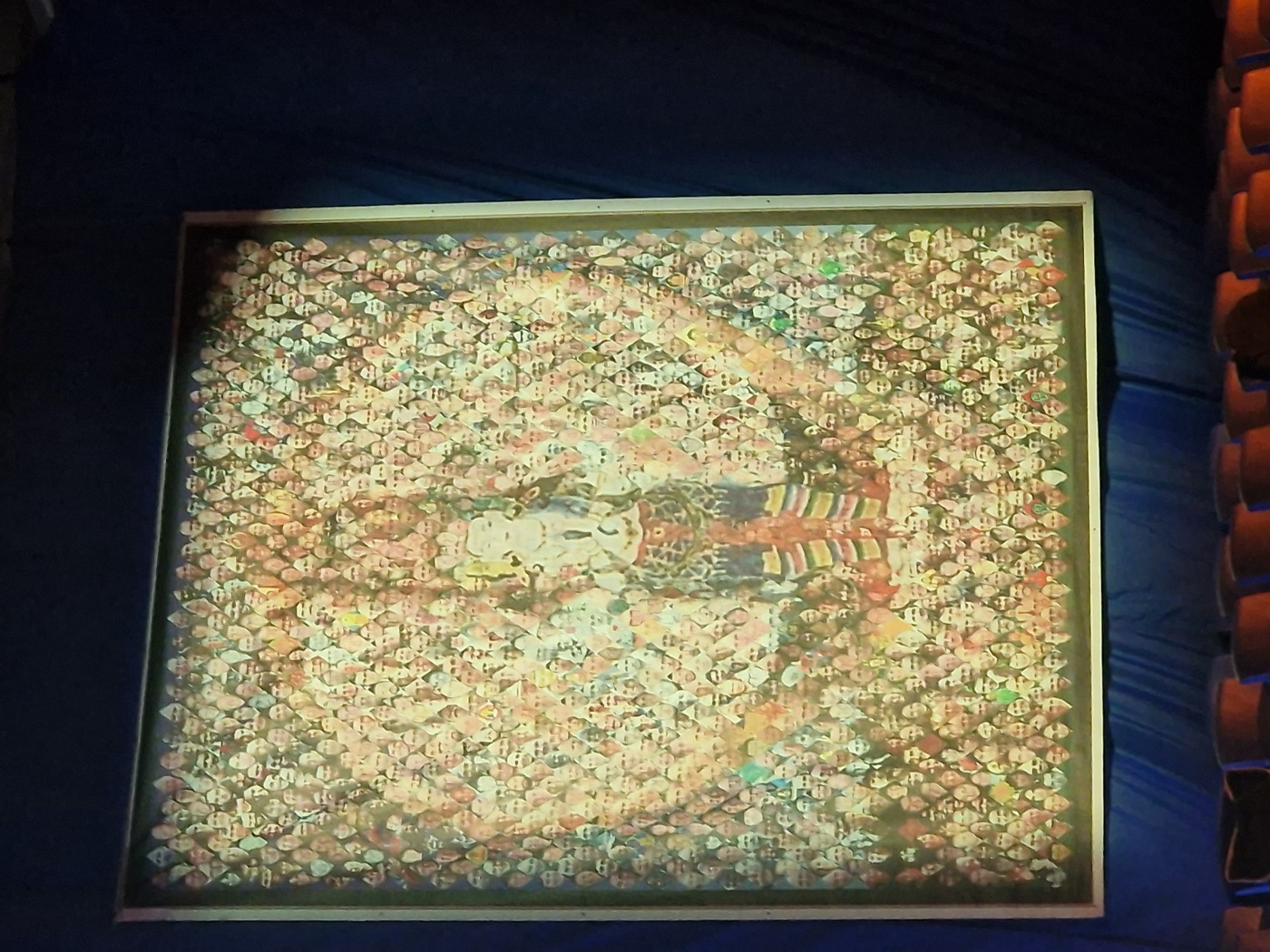
Photos from the week
References
Walshe, M. (trans.) (1995) The Long Discourses of the Buddha: A Translation of the Dīgha Nikāya. Boston: Wisdom Publications. (Sāmaññaphala Sutta, DN 2.)


0 comments
No comments yet - be the first.